Books And Articles
Microbiologically influenced corrosion (MIC) describes the largely negative influence that a microorganism can have on a material, with sometimes severe consequences for humans, nature, and the economy. Although the problem of MIC has been known for decades, work on this topic has been fragmented and isolated; interdisciplinarity is the exception rather than the rule. This book offers a comprehensive and interdisciplinary investigation of the interaction between materials science and microbiology to find solutions to cope with adverse effects of MIC. It includes the current state of the field, advances in technologies, and guidance for the future to address remaining challenges.
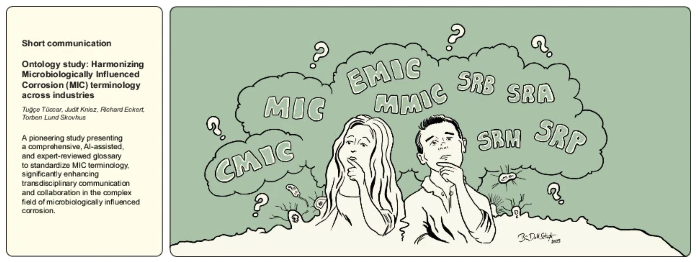
Microbiologically influenced corrosion (MIC) is a pervasive yet poorly understood phenomenon, partly due to inconsistent terminology across scientific and industrial domains. Standardized terminology is essential to improve communication and advance MIC research and mitigation strategies. To address this gap, we developed a comprehensive glossary of MIC-related terms by compiling terminology from industry standards, glossaries, and scientific literature across multiple sectors. Terms were analyzed to identify consensus and discrepancies, enabling clarification and harmonization of definitions. The resulting glossary provides clear, consistent terminology to reduce misunderstandings and foster transdisciplinary dialog. This initiative represents a critical step toward unifying MIC-related language, supporting more effective diagnosis, mitigation, and control strategies. By promoting standardized communication, the glossary lays the foundation for improved knowledge exchange between academia and industry, ultimately contributing to better management of MIC in diverse applications.
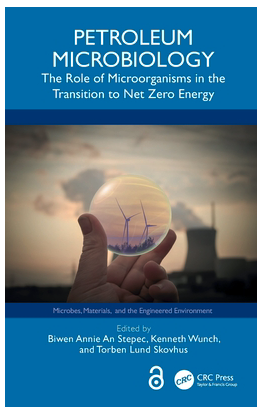
Petroleum Microbiology: The Role of Microorganisms in the Transition to Net Zero Energy
In the oil and gas industry, technologies have been developed to address microbial-related issues such as oil field souring, microbiologically influenced corrosion, biofouling, and targeted measures for risk assessment and mitigation. Microorganisms have also benefited the oil sector through microbial-enhanced oil recovery and bioremediation of petroleum-contaminated environments. However, during the current transitional phase in the oil and gas industry, the role of the microbiome within the current infrastructure and its potential impact on future systems remains an open question. Petroleum Microbiology: The Role of Microorganisms in the Transition to Net Zero Energy explores technological advances in applied microbiology in the oil and gas sector that can be utilized in its transition to renewable energy systems.
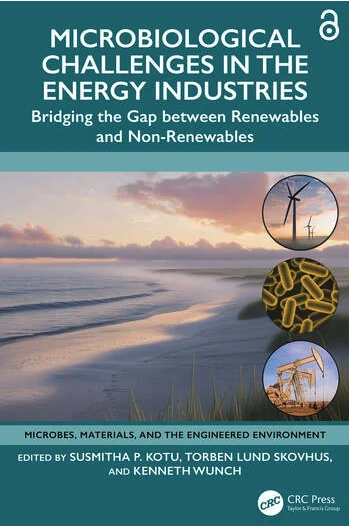
With an emerging focus on fighting climate change and improving sustainability, it is imperative to share knowledge gained from investigating and addressing microbiological challenges in the non-renewable industry to the renewable industry. This book explores topics related to microbiological challenges impacting the energy sector. The chapters cover technological advances related to a wide range of topics including, but not limited to, microbiologically influenced corrosion in the energy sector, hydrocarbon biodegradation, and hydrogen storage. It offers cross-disciplinary knowledge and facilitates collaboration that can lead to holistic solutions for addressing complex microbiological challenges faced by the energy industry.
Development of an expert system for assessing failures in oil and gas pipelines due to microbiologically influenced corrosion (MIC)
This study highlights the modeling of an expert system for the classification of internal microbiologically influenced corrosion (MIC) failures related to pipelines in the upstream oil and gas industry. The model is based on artificial neural networks (ANNs) and involves the participation of 15 MIC experts. Each expert evaluated a number of model case studies ranging from MIC- to non-MIC-driven upstream pipeline failures. The model accounts for variations in microbiological testing methods, microbiological sample types, and degradation morphology, among other variables. It also accounts for missing datasets, which is commonly the case in actual failure assessments.
Microbiologically influenced corrosion—more than just microorganisms
Microbiologically influenced corrosion (MIC) is a phenomenon of increasing concern that affects various materials and sectors of society. MIC describes the effects, often negative, that a material can experience due to the presence of microorganisms. Unfortunately, although several research groups and industrial actors worldwide have already addressed MIC, discussions are fragmented, while information sharing and willingness to reach out to other disciplines are limited. A truly interdisciplinary approach, which would be logical for this material/biology/chemistry-related challenge, is rarely taken. In this review, we highlight critical non-biological aspects of MIC that can sometimes be overlooked by microbiologists working on MIC but are highly relevant for an overall understanding of this phenomenon…

New Publication!
Microbes, Materials, and the Engineered Environment Series
This CRC Press series encourages joint efforts between authors/editors from different disciplines, particularly microbiology with physical sciences and engineering, where transdisciplinary perspectives on solving the problem are explored.
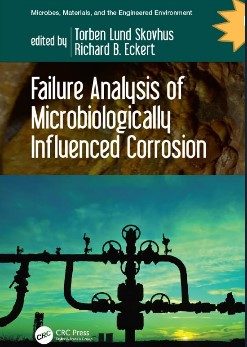
Failure Analysis of Microbiologically Influenced Corrosion
Edited by T.L. Skovhus and R.B. Eckert
Failure Analysis of Microbiologically Influenced Corrosion serves as a complete guide to corrosion failure analysis with an emphasis on the diagnosis of microbiologically influenced corrosion (MIC). By applying the principles of chemistry, microbiology, and metallurgy, readers will be able to reliably determine the mechanistic cause of corrosion damage and failures and select the appropriate methods for mitigating future corrosion incidents. This book is part of the CRC Press editorial series Microbes, Materials and the Engineered Environment.
“With authors with expertise in microbiology, corrosion, materials, and failure investigation, this book provides tools for engineers, scientists, and technologists to successfully combat MIC issues.”
- Provides background information on the forensic process, types of data or evidence needed to perform the analysis
- Expert authors from across the globe
- Offers specific guidelines for conducting MIC failure analyses
- Protocols for sample handling, preservation, evidence collection and more
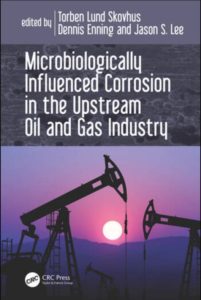
Microbiologically Influenced Corrosion in the Upstream Oil and Gas Industry
Edited by T.L. Skovhus, D. Enning and J. Lee
Microorganisms are ubiquitously present in petroleum reservoirs and the facilities that produce them. Pipelines, vessels, and other equipment used in upstream oil and gas operations provide a vast and predominantly anoxic environment for microorganisms to thrive. The biggest technical challenge resulting from microbial activity in these engineered environments is the impact on materials integrity. Oilfield microorganisms can affect materials integrity profoundly through a multitude of elusive (bio)chemical mechanisms, collectively referred to as microbiologically influenced corrosion (MIC). MIC is estimated to account for 20 to 30% of all corrosion-related costs in the oil and gas industry.
“An indispensable resource for anyone working in the area of MIC.”
- A comprehensive reference for integrity engineers, production chemists, oilfield microbiologists, and scientists working in the field of petroleum microbiology or corrosion.
- Exhaustively researched by leaders from both industry and academia.
- Discusses the latest technological and scientific advances as well as relevant case studies to convey to readers an understanding of MIC and its effective management.
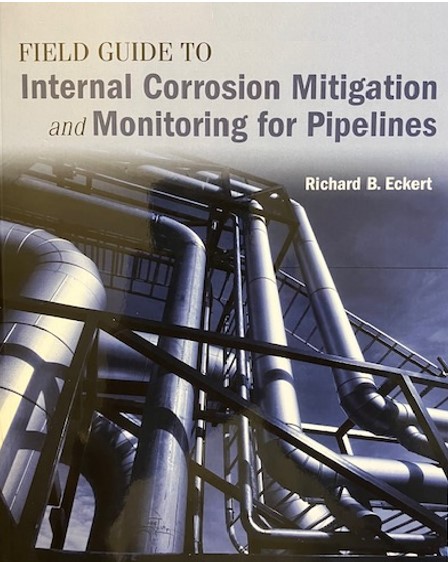
Field Guide to Internal Corrosion Mitigation and Monitoring for Pipelines
by Richard B. Eckert
This book is intended to help oil and gas pipeline operators, corrosion professionals, integrity experts and risk management practitioners assess, control, and manage the effects of internal corrosion on pipeline systems, thus improving the safety, reliability and integrity of their operations.
While the focus of this book is on pipelines, the content is broadly applicable to upstream equipment, processing facilities, mid-stream pipelines, liquid and gas storage assets, and delivery/distribution assets.
In addition to technical information, the book provides suggestions and potential strategies for applying this information.
The fundamental process of managing internal corrosion consists of threat assessment, mitigation selection and implementation, and monitoring the effectiveness of mitigation. This book is divided into these three main sections to help emphasize the point that corrosion management is a process, not a one-time event.
“Regardless of one’s background in corrosion or level of knowledge or experience, this organized approach will help the reader visualize where all of the pieces of the corrosion management puzzle fit together.” – World Pipelines
- Describes chemical, microbial and corrosion monitoring methods applicable to oil and gas assets and to other industries.
- Understand how multiple lines of evidence are needed to diagnose MIC and other corrosion mechanisms.
- Covers the roles of corrosion models in understanding the contributing factors to corrosion.
Learn more about diagnosing MIC using multiple lines of evidence
Read about the different types of evidence or information that are used to help diagnose microbiologically influenced corrosion.
Learn the questions to ask when integrating different forms of evidence, such as microbiological and chemical!

